
As of 2026, 52% of Americans with remote-capable jobs are working in a hybrid arrangement, and yet companies using WeWork have expanded their office footprint by nearly 10% in the first half of the year. While 76% of workers say remote work improves their work-life balance, they also acknowledge that working fully remotely can increase burnout and disengagement. Workers come to the office not because they must, but because they want to connect with their colleagues, work collaboratively, and engage with the company culture.
This shift puts greater emphasis on how workspaces are designed. An office needs to be more than a place to sit and work; it should be an engaging environment that supports different work styles, reflects company values, and gives employees a reason to come together.
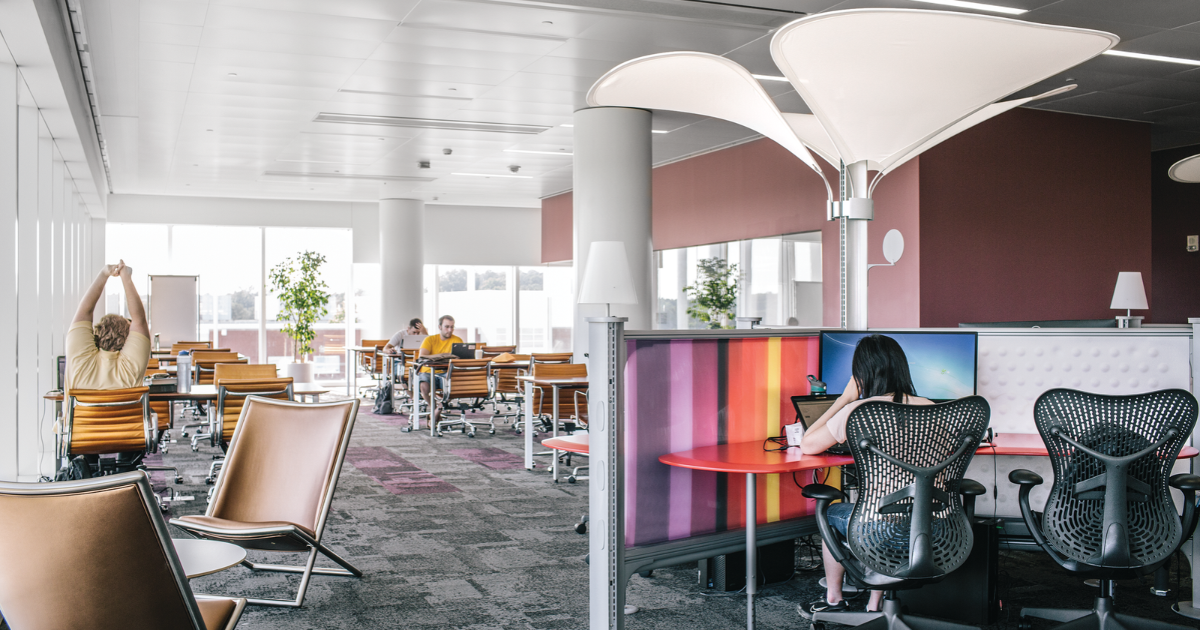
Design decisions that align with company values
From the overall office layout to the smallest furniture choices, the physical environment sends messages about how people are expected to work, interact, and connect. When these decisions align with company culture, the workspace can reinforce the behaviors an organization wants to encourage. When they don't, the result can be a space that works against the very culture the company is trying to build.
Why does it matter? Because a lack of cohesion between what is communicated and what is experienced can leave workers feeling unmotivated and disengaged. In practice, this means that a company that values teamwork shouldn't expect its highly collaborative teams to work at their best in a cubicle layout, while a company that values flexibility should provide a hybrid layout where workers can choose the space that best fits their needs.
The office layout sets the tone
The way an office is laid out influences how people use it. It can encourage collaboration, provide opportunities for informal interaction, or create boundaries that support focus and privacy. Each approach communicates something different about the workplace and the behaviors it prioritizes. The key is to ensure that the design has a purpose and that this purpose aligns with how the company wants its people to work.
Furniture systems that speak volumes
While the overall layout establishes the foundation, furniture can speak volumes when it comes to company values. Consider something as simple as a chair. Whether fixed or movable, chairs can communicate the level of flexibility and structure within a space. Comfortable seating and lounge areas invite conversation, while shared benches communicate speed and agility.
Sound is another important consideration. While open environments can support teamwork and collaboration, adding sound-absorbing panels and creating quiet spaces demonstrates the importance of accommodating diverse work styles. Companies whose work is more individual and task-oriented might want to adopt high-backed booths to create a structured environment that minimizes distractions.
An evolving work environment
When a workspace doesn't meet people's needs, they often find ways to adapt to it. Some of these adaptations can be positive, revealing new and useful ways to use a space. Others are signs that the original design hasn't fully considered how people work. Either way, these behaviors offer valuable insight. They show how employees interact with their environment, what they need from it, and where the existing design may be falling short.
Rather than viewing these workarounds as isolated inconveniences, organizations can use them as an opportunity to better understand their teams. Observing how employees use the office, gathering feedback, and identifying recurring challenges can help ensure that the workspace evolves alongside the needs of the business.
Let culture lead design
Company culture is shaped by leadership, communication, relationships, and shared values. We argue that it's also influenced by the environment in which people spend their working days. That's why involving leaders in the design process from the outset is so valuable. By identifying the organization's values, goals, and ways of working early on, leaders and designers can work together to create a workspace that supports the culture the company wants to foster. Without this alignment, design decisions risk being driven by aesthetics or immediate practical needs alone, missing an opportunity to create an environment that reinforces the company's identity. When culture informs design from the beginning, the workspace becomes more than a place to work; it becomes a meaningful expression of the organization and place for its people to do their best work.